China Agriculture AI: A Study-Mission Guide
Evaluate agricultural AI in China through crop cycles, sensor reliability, water use, farm labour and the cost of keeping equipment working.
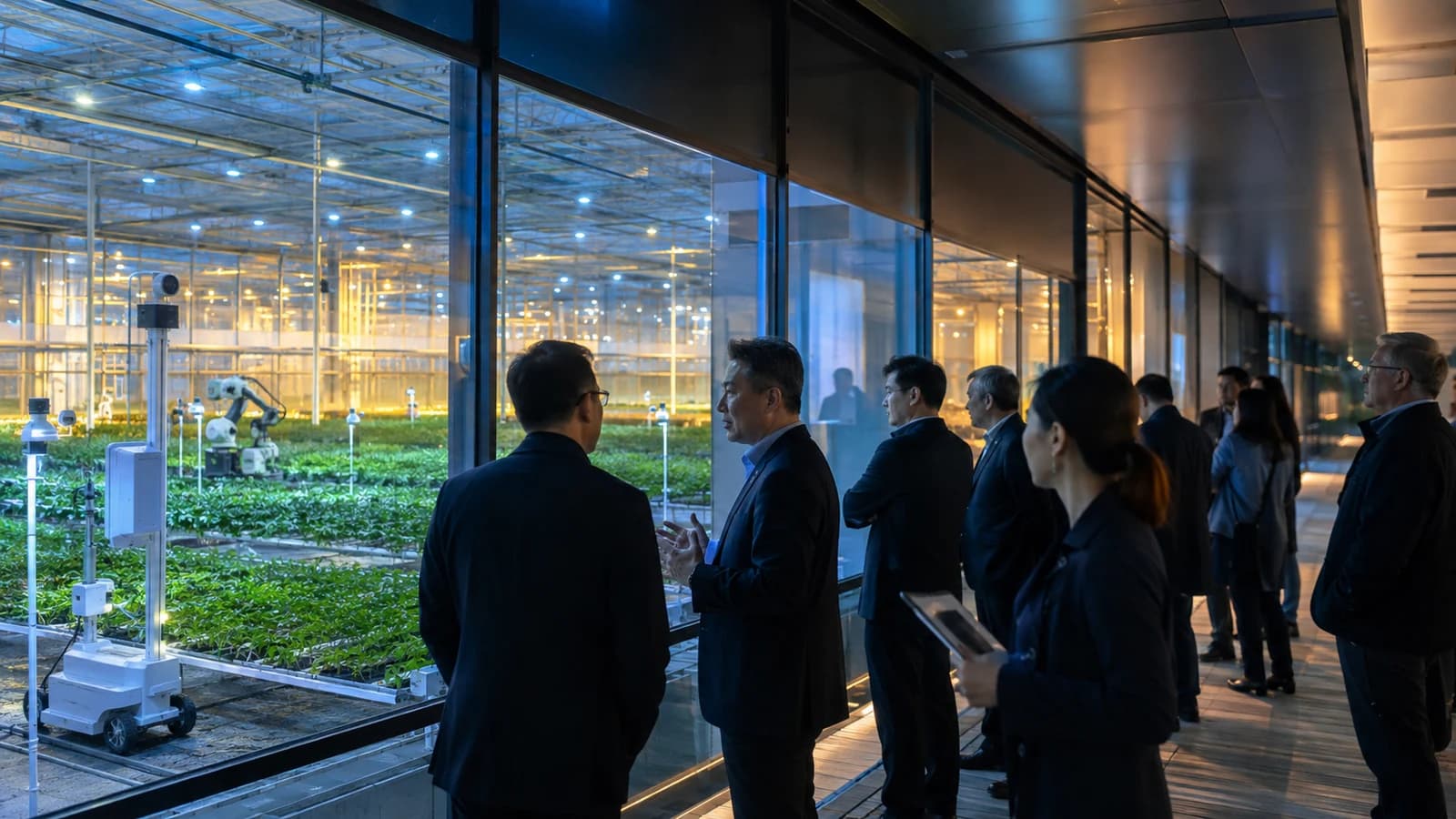
An agricultural AI visit should follow a decision from the field to the grower: when to irrigate, where to inspect disease, or whether to harvest. A prediction only has value if someone can act on it within the crop's operating window. Compare results across seasons, field conditions and equipment availability before discussing scale.
What to evaluate
Problem boundary
Define the crop, livestock, resource, labour or supply-chain decision.
Field evidence
Inspect data collection, seasonal variation, connectivity, equipment and human practice.
Outcome measurement
Compare yield, quality, inputs, loss, labour, resilience and total cost.
Transfer conditions
Test climate, farm structure, infrastructure, skills and commercial support.
Worked evaluation exercise
The following is an illustrative assessment exercise, not a reported customer result.
For an irrigation pilot, choose comparable plots and record rainfall, soil conditions, water applied, crop output and labour time. Agree how the team will handle a failed sensor or unavailable network. A lower water reading is not a useful outcome if crop quality deteriorates or manual checks consume the saving. Ask the host to explain who repairs equipment during a busy period and include that support cost in the comparison. This is a proposed evaluation exercise, not a claim about a particular farm.
Questions for the operating team
- What baseline and season support the reported result?
- How does the system behave with missing field data?
- Who maintains hardware and models after deployment?
Warning signs
- Single demonstration extrapolated across regions.
- Accuracy reported without farm outcome.
- Connectivity and maintenance costs omitted.
Planning the visit
Use these questions to scope an industry-focused China AI program. Agree which records and operating workflows can be examined before confirming meetings; host participation and access require confirmation. Our research method explains how we structure the brief and follow-up.
References and scope
These references provide policy or risk-management context. They do not independently verify a host's performance or the illustrative exercise above.