What Executives Should Ask During a China Robotics Factory Visit
Inspect robot factory demonstrations using complete task cycles, changeovers, exception recovery, operator effort and cost per accepted output.
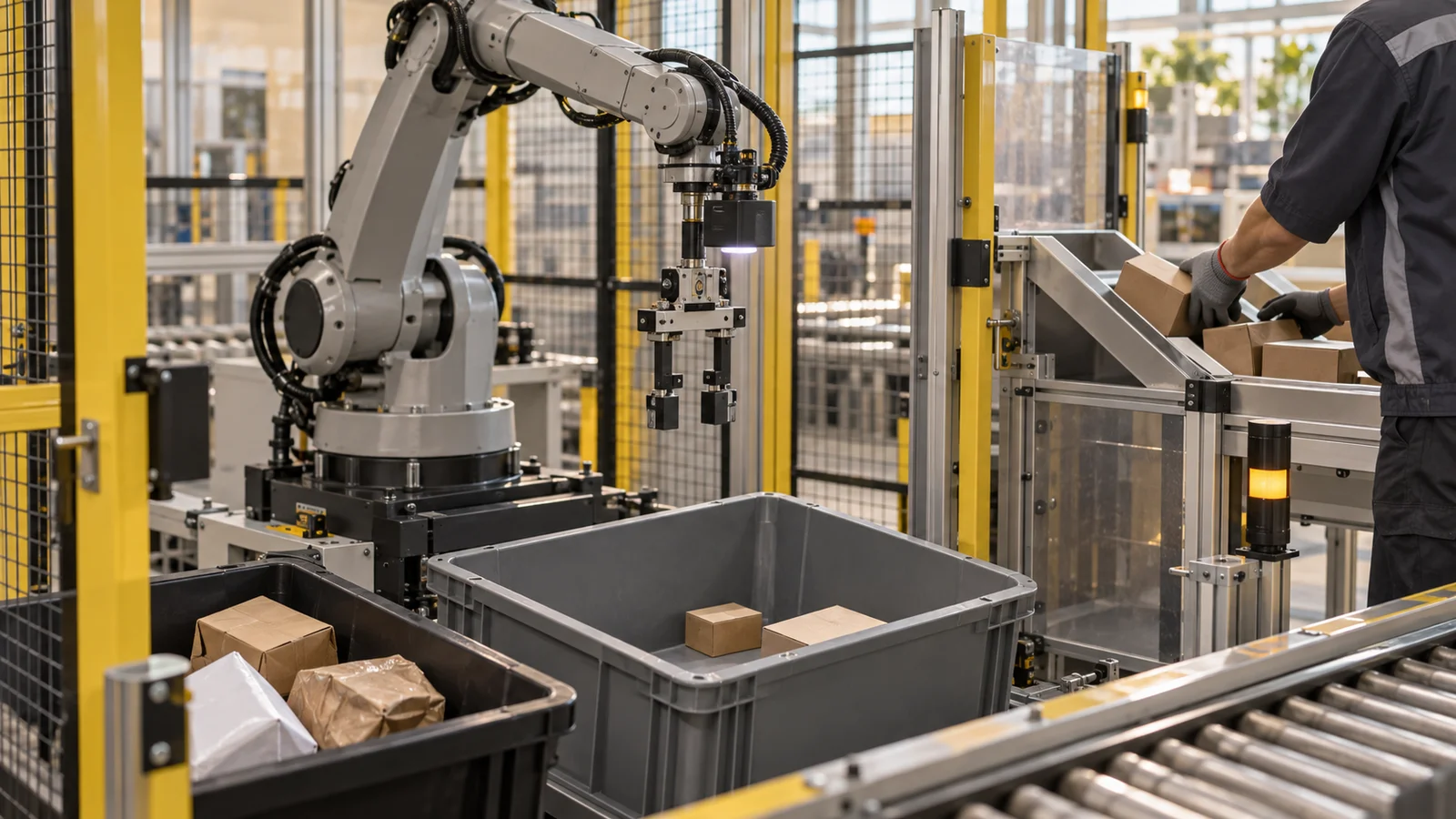
A robotics factory visit should follow an entire task cycle, including the work before and after the robot moves. Ask who prepares materials, clears faults and checks output. A fast demonstration can omit precisely the activities that determine whether the application is economical in a different plant.
What to evaluate
Task capability
Observe perception, manipulation, mobility and recovery under realistic variation.
Hardware quality
Inspect components, tolerances, testing, yield and maintainability.
Safety system
Understand limits, stops, supervision and human-robot interaction.
Deployment economics
Measure utilisation, intervention, service, integration and task value.
Worked evaluation exercise
The following is an illustrative assessment exercise, not a reported customer result.
For a picking task, include different package shapes, depleted bins and damaged labels in an agreed test set. Count successful accepted picks over the full session, including resets and human interventions. Ask how long a changeover takes and what training the operator needs. Use the resulting process map to compare automation with the existing workflow before discussing additional cells or a different robot type.
Questions for the operating team
- How is mean time between interventions tracked?
- Which components dominate failure and service cost?
- What changes when the environment is not staged?
Warning signs
- Video demonstrations substituted for live testing.
- No record of intervention rates.
- Unit cost discussed without service and integration.
Planning the visit
Use these questions to scope an industry-focused China AI program. Agree which records and operating workflows can be examined before confirming meetings; host participation and access require confirmation. Our research method explains how we structure the brief and follow-up.
References and scope
These references provide policy or risk-management context. They do not independently verify a host's performance or the illustrative exercise above.